
INTERVIEW: JULIEN KERKNAWI About distributing, making films, and Two Prosecutors:
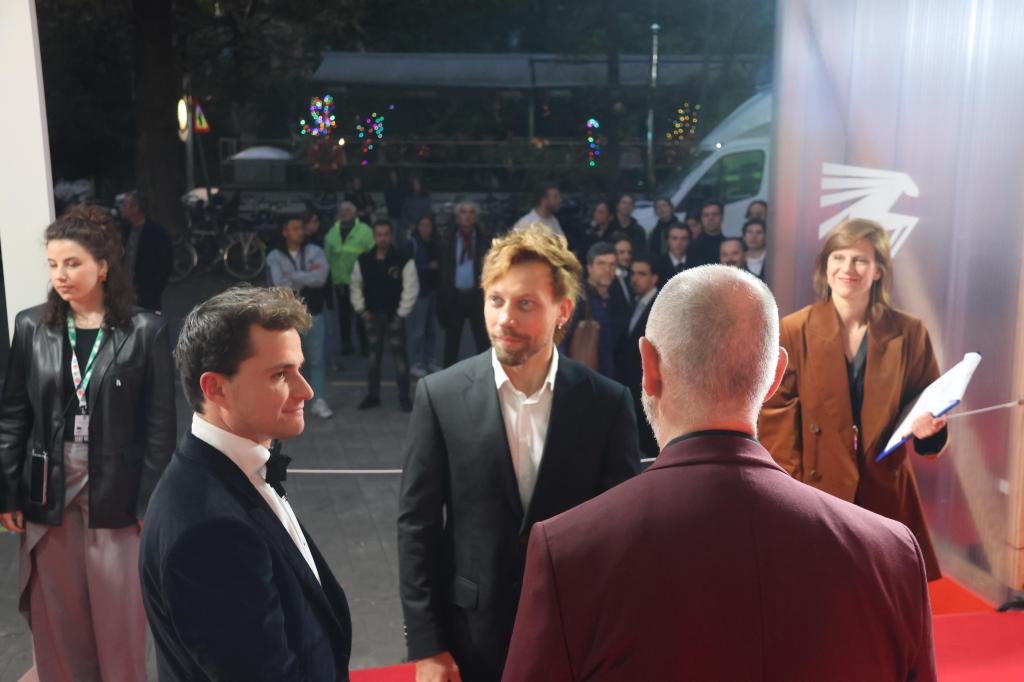
Julien Kerknawi is a Belgian filmmaker who did not sit still when traditional distribution channels passed over his debut film. With his brand-new distribution label Enigma Releasing – launched around his own World War I epic The Last Front – he wants to create space for bold auteur cinema. At Film Fest Ghent, Enigma presented its first release, Two Prosecutors, a relentless thriller with sharp social critique that will also be shown in various Belgian cinemas from November 5, 2025 onward. I spoke with Julien about his journey from young director to distributor with a mission. We discussed creative autonomy, the challenges of independent film distribution, and the drive to reawaken audiences with real cinema. An interview that took place just before Film Fest Ghent in October 2025.
From Filmmaker to Distributor
Esmeralda Wolf: Could you sketch your artistic and professional journey in broad strokes? What do you consider the most important milestones and challenges so far?
Julien Kerknawi: I started out as a young filmmaker already in my teenage years. Together with my sister, I founded an LLC so I could direct my debut film. That became The Last Front, a project that spent no less than eight years in pre-production, practically my entire twenties. It was a phenomenal ride with highs and lows. A few key moments will always stay with me: the difficult production process, the very first day of shooting (August 29th — that date now feels like a birthday in my life), and finally the release in Belgium this past February. It was an emotional whirlwind.
After The Last Front, I realized how difficult the traditional film world can be. I’ve always been very protective of my work and I wanted my film to truly make it into cinemas, but so many doors stayed closed. Simply because I’m not a “nepo baby”; I don’t come from big money or a well-known family. The major players weren’t interested. So I decided to take the leap myself: I founded Enigma Releasing. We released The Last Front independently in theaters in the US and also in the UK. After that, other distributors picked up the film and it began to take on a life of its own. It was an amazing time, but when that period ended, I fell into a dark void. My ultimate dream had already come true by the age of thirty, and then you ask yourself: what now?
A few months later, the answer came in the form of an unexpected phone call. [laughs] My Hollywood agent called me to terminate the contract. I was signed to one of the three biggest agencies, but after eight months they dropped me, under the excuse of “there’s no work.” That’s how much promises are worth in this industry. Many people would find that frustrating, but honestly, I see it as motivation. Every challenge brings a solution with it. I’m very stoic that way: I handle rejection and stress well. If something doesn’t go the way you hoped, I see that as even more reason to prove that it can work.
That phone call from my agent, two weeks before Cannes, I now consider a kind of liberation. I was done with all the nonsense. In the end, it’s very simple: I want to direct films, and I want to see great films in the cinema. That’s it. So I thought to myself: you know what? Then we’ll just bring films back to the theaters ourselves!
“THE AUTHOR IS SACRED”
You clearly have a strong belief in auteur cinema, and you’re taking big risks with your first releases. Could you tell us a bit more about the vision behind Enigma Releasing?
With Enigma, we started looking around at film markets together with a few colleagues. We watched an enormous number of films and decided: we’re going to release about five strong films in Belgian cinemas. Two Prosecutors is the first of that series. When I saw Two Prosecutors, it was immediately a bull’s-eye. Discovering that film was a joy; I believed in it wholeheartedly from the very beginning. We exercised patience to secure the rights and built a strong relationship with the filmmakers. Of course, these are big risks, bringing an unknown arthouse film to the market, but I believe very strongly in real auteur cinema.
And when I say real auteur films, I don’t mean the kind of “art film” that’s actually just a disguised marketing product, like in Hollywood where there are only about five “auteurs” left and everyone else gets sanded down by a big machine. Audiences are tired of that homogenized output; it’s no coincidence that so much apathy surrounds cinema nowadays. Many people tune out because there is too much greed and too little authenticity attached to films. Our mantra at Enigma is therefore: the auteur is sacred. We don’t look at big actors or spreadsheets full of numbers. Nobody cares about the budget! We don’t even look at the language of the film. We look at just one thing: Do I believe what I see on screen? Does it move me or not?
If it moves us, we jump. It’s actually that simple. Take Two Prosecutors: that film by director Sergey (a young Russian filmmaker) felt “right” to us from the very first moment. Everything aligns, every choice is intentional and authentic. We absolutely wanted to release it. That way of thinking, choosing with the heart, not with the calculator, is in Enigma’s DNA.
That’s wonderful to hear.
Thank you!
“CINEMA WITH A CAPITAL C”
Many people, myself included, miss that authenticity you’re talking about. These days, so much revolves around viewing figures and revenue models that films with a truly personal story barely get any attention. On top of that, there’s a threshold for audiences: if you’re not actively searching, you’ll often only see the commercial releases in the big theaters and miss the better films entirely.
Exactly. Enigma wants to change that. We are very deliberately a “cinema-first” house: we don’t participate in TV or streaming. It’s cinema with a capital C. We bring films back into real theaters, where they belong, and we aim for an audience that wants to experience cinema again. Sometimes that audience grows slowly, sometimes quickly, but we are convinced that it is there.
Our next film is actually completely different in tone from Two Prosecutors: it’s a warm family film, a real feel-good for a Sunday afternoon with the whole family. But that film moves you too. It has a strong archetypal story and imagery you feel immediately. There are so many filmmakers who can do that, but their films are often kept under the radar or quickly buried in the overwhelming supply. We actually enjoy seeking out those voices and bringing them to the forefront.
So you’re willing to take the risk of bringing such films to the audience.
Yes, absolutely. And don’t get me wrong: I didn’t start overconfident. I learned a great deal from The Last Front and its distribution. For the release campaign of Two Prosecutors we are working with an experienced PR partner (Dirk from Badass PR), and that’s going well. I’ve taken plenty of notes about what works and what doesn’t in terms of marketing. And Enigma itself is actually the result of the three major stages in my life as a filmmaker:
Phase one: dreaming of making a film.
Phase two: actually making that film, including all the things no film school prepares you for (like: what do you do when the film is finished and you feel yourself falling into a void? It sounds funny, but it isn’t).
And then phase three: finding my voice as a filmmaker who now also releases films.
It’s quite a strange turn: I ended up getting what I wanted. I made my film and it was released, but to make that happen I had to figure everything out myself. Now I can use that journey to support other filmmakers and their films. We get a huge amount of joy out of that process. The journey is the best part, so to speak. I’m genuinely happy that I rediscovered my love for cinema in this roundabout way.
And believe me, it stays exciting! For example, it’s fantastic to see the attendance numbers come in after a premiere. I started Enigma entirely with my own resources, without a bank loan. That’s definitely not easy—it’s very hard to start something in the film sector if your parents aren’t millionaires, I can tell you that.
I can imagine, yes.
And yet, I get enormous satisfaction from doing it this way. I wouldn’t want it any other way. It’s the only way to truly be free as an entrepreneur, without compromise. And look, here we are: maybe we’ll be able to bring a new auteur film to theaters every three months. After that, we also give those films a respectful afterlife in physical distribution. We even have a strategy to revive physical media, DVD and Blu-ray.
Ah, so you still believe in DVD and Blu-ray? Will I actually be able to buy Two Prosecutors on disc later?
Yes, absolutely, that’s the plan. The focus of Enigma… Look, I like to compare film to a valuable piece of parchment written by a monk. There are only a few copies, like a Magna Carta. I don’t want to sound mystical, but what I mean is: a film is something unique and tangible, not disposable. Don’t get me wrong, we’re not going to make medieval manuscripts of our Blu-rays, but we do treat films with respect. In today’s film landscape, the value of cinema has somewhat disappeared, I think. Stacks of mediocre DVDs end up in bargain bins for one euro… We want to push against that trend.
There are films that you simply must have at home.
Exactly! The real gems belong physically on your shelf. And I also don’t believe that streaming is the solution to everything. Just look at what streaming platforms (Netflix and co) are willing to pay for films and catalogs—it’s often depressingly little. I notice it in my bank account as a filmmaker too.
I notice the same, yes!
All those ‘fancy’ conveniences aside… In the end, I want Enigma to be seen as a brand that respects cinema. When people see our logo, they should think: this stands for love of cinema. We’re a team of five people, and everything we come up with and decide is fueled purely by passion. At the same time, I admit there may also be a bit of a rebellious edge to our approach: a kind of “fuck you” attitude toward the establishment.
So what sets you apart from that establishment? What do you think is missing in today’s landscape?
Take the situation of the average emerging filmmaker. I told you about my agent dropping me, “there’s no work,” and that I should go beg for opportunities again. We refuse to play that game. We simply looked past all that nonsense and said: we know what a good film looks like. We can see that the numbers can work if you believe in it. And so we just go for it. Instead of sitting and waiting for a big studio, we bring the films we deeply believe in directly to the audience. In the end, a film is not a product from a factory, but a puzzle, an enigma, that we assemble. And when all the pieces fit, you know it’s right.
Sorry, that was a very long explanation!
Not at all, I’m hanging on every word.
“VISUAL INSPIRATIONS“
Which filmmakers or film movements have personally inspired you the most? Do you see those influences reflected in your own work and choices?
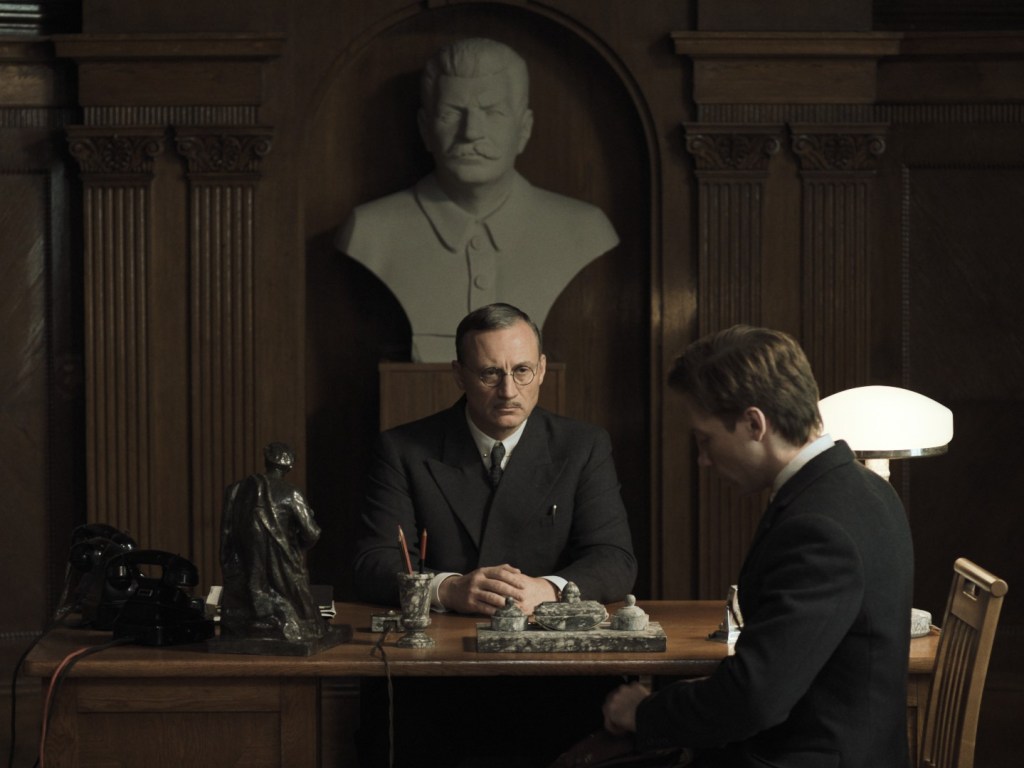
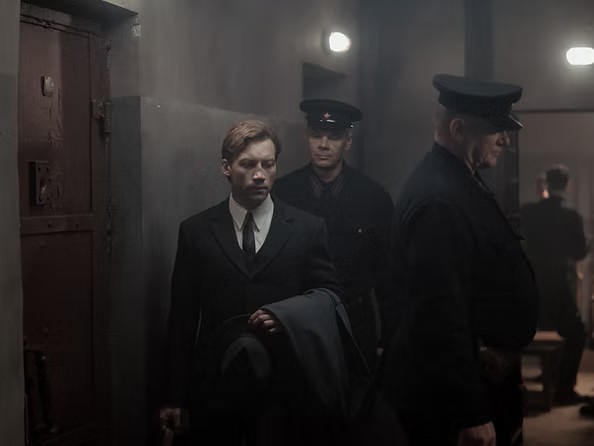
I’m a huge fan of Terrence Malick and Ridley Scott, my two favorite directors. They combine the best of a clear American storytelling style with, at the same time, a lot of atmosphere and poetry. That’s exactly the blend I strive for myself. Maybe it appeals to me even more because I have partly French roots. When you think of romance in film and you say France, you also say Italy. I’m very visually oriented and I love the romance of a powerful image. For instance, in Two Prosecutors, there’s a shot of an honest prosecutor surrounded by corrupt officers… That image on its own is so strong, I don’t need a single word of explanation to understand what it means. My task as a distributor is to make sure the theater is full so that that kind of moment can be experienced.
Yes, I understand.
So yes, I’m very visually driven. Recently, at a festival in Hong Kong, we saw a film that we are now in talks about. I found that film phenomenal. I understood it, I felt it, the characters breathe the atmosphere of Hong Kong. I once spent a month in Hong Kong myself, and while watching, I immediately felt transported back there. That’s what cinema can do to you. I connect instantly with auteurs who know how to convey their story visually. And well, Terrence Malick is Terrence Malick of course, there is only one. Films that are that atmospheric and function almost like pure visual poetry grab hold of you immediately and never let go.
May I ask, purely personally, what you think of Pedro Almodóvar’s films?
Honestly? I have to admit I’ve never seen an Almodóvar film. [laughs] Sorry!
No problem! And Lars von Trier — does that name mean something to you?
Of course. His Melancholia, for example, I found phenomenal. Von Trier apparently struggles heavily with depression, tragic, of course, but he is and remains a true auteur, a pure artist. What can I say? A phenomenal man.
I don’t disagree. I remember seeing Antichrist (von Trier) at its premiere and being completely overwhelmed. A journalist asked me afterward what I thought of it and I could only stammer that I needed to process it. [laughs] I’ve probably seen that film fifty times since, and it still intrigues me.
See, those kinds of powerful images grab you without you even fully grasping them at first. Films like those of Von Trier are exactly the reason why we do this. Images that strike you as a human being, you don’t forget them. That keeps confirming for me why you must choose films with your feeling, and not with spreadsheets.
Absolutely.
You certainly shouldn’t, God forbid, feed an actor’s box-office numbers into ChatGPT and make your decision based on that! Yet that’s happening more often than you’d think these days. They throw all the data into a model to supposedly “play it safe,” but the world doesn’t work that way. Cinema doesn’t work that way. [shakes head] No, I maintain: follow your own taste and intuition. Only then can you truly be surprised and moved by film.
“SOCIAL CRITIQUE AS A DRIVING FORCE”
What drew you to Two Prosecutors? Was it the script, the themes, the style… what convinced you to make this film Enigma’s first release?
Good question. Look, I’m thirty now, and it’s really only in the past seven years that I’ve increasingly noticed how honest, free communication is being restricted more and more. I won’t go too deep, but everywhere, even at the level of our legal system, you see signs that freedom of expression and justice are under pressure. I find that a dangerous development. To illustrate: my very first short film, which I made at fourteen, dealt with similar themes in the year 1904. Apparently, this theme has been inside me for a long time.
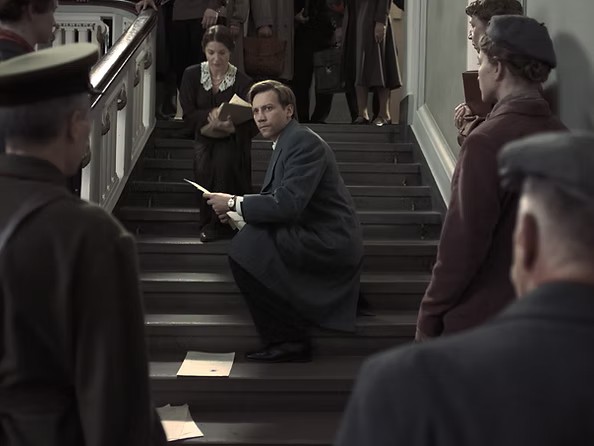
When I saw Two Prosecutors, I immediately felt: this story must be told. The film is about a prosecutor who comes into possession of a letter that should have been destroyed. In that letter are revelations about someone unjustly imprisoned in a labor camp. The prosecutor decides to do everything possible to free that person. But he faces resistance everywhere: at the front door, he’s stopped; in the hallway, he’s ridiculed… At every step of the system, he hits a wall. Two Prosecutors isn’t an easy film; for a long time, you’re in the dark about where it’s going, your patience is truly tested. But that makes the climax all the more powerful: the film builds like a snowball that keeps growing, culminating in a phenomenal ending. A climax that completely blows you away.
Visually, the film is also stunning. Every scene is stylish and meticulously framed, truly masterful cinematography. And content-wise, unfortunately, it’s very relevant — closer to home than you might think. If you look around, some freedoms and rights are no longer taken for granted. For example, recently in the U.K., someone was sentenced to two years in prison for a few Facebook posts. I thought: wow, I don’t want to live in a time where that’s possible. So if there’s one film for which I want to give my all to bring it to theaters, it’s this one. Two Prosecutors confronts us with something very fundamental.
Does that answer your question? [laughs] In short, I find Two Prosecutors an incredibly relevant and powerful film. You feel that the director is a master who fully controls his craft. It’s a sober film, a limited number of locations, no bombast, but it takes its time to make its point, and that’s exactly what grabs you by the throat.
Of course, I have my personal preferences, but beyond that, I have respect for all types of cinema. Not every film is good, but all films are interesting in their own way. I studied History, so maybe I look at it like this: every film is a product of its time, almost like an archival piece of the human mind at that moment. Imagine it’s the year 2100 and you can watch all the films from the two centuries before — you’d get a very clear picture of how people thought and lived. Fascinating, right?
But back to Two Prosecutors: the story is about perhaps the last honest man within a corrupt system, someone who stands up for what is right. I truly empathize with that character. There are things I believe in and want to stand up for, even if everyone around me says, “No, forget it.” I recognize that stubbornness in the prosecutor. In short: I have immense respect for this film, and it touches me personally.
So the theme resonates with you on a personal level as well.
Absolutely. Not for nothing did people at Cannes go completely wild over Two Prosecutors [the film had its world premiere there, ed.]. Ironically, this film was probably ignored by traditional distributors because it’s in Russian. It’s not an English-language film with Margot Robbie in the lead, so on paper, they probably didn’t see the potential. But we don’t care about that. We simply want to bring phenomenal films to cinemas. By the way, Margot Robbie is a fantastic actress — don’t get me wrong — but you see my point: we don’t choose a film because of the big names or the language, but because of the content and quality.
“CHALLENGES FOR A DISTRIBUTOR”
How did the negotiations go for acquiring Two Prosecutors for distribution?
Very smoothly, actually. We approached it very humbly, and the conversation went exceptionally well. There was mutual respect, and that makes all the difference. Honestly, I don’t enjoy negotiating with Americans; I first tried with another film we wanted to acquire, and it felt like talking to snakes. [laughs] You just can’t get anywhere. With Two Prosecutors, on the other hand, it was simple: a fair price, clear terms, and respect on both sides. No tricky maneuvers, no endless tug-of-war. I found that blissful.
Clear. I see that Two Prosecutors is scoring very high on Rotten Tomatoes over 90%. How important is such a score for you as a distributor? And what are your expectations for the Belgian audience?
A unanimously positive score definitely helps. Especially with people in the industry or partners who don’t yet know us. No one currently knows Enigma Releasing; I know our value, but others don’t. People like to cling to an objective metric, a number to measure quality. Like: “Look, this film has universal acclaim, so it must be good.” It gives a certain level of trust. In that sense, a Rotten Tomatoes score opens doors, or at least eyes. It makes conversations easier, I notice.
For me personally, it’s not the most important thing, but it does affect perception. By comparison: my own film The Last Front was received lukewarmly by the Belgian press at the time, averaging maybe two stars out of five. “Julien doesn’t know what he’s doing,” some almost literally wrote. In the U.S., however, an influential film blog called The Last Front the best war film of the year, even above Civil War. On Rotten Tomatoes, The Last Front scored 74% in the U.S. I dare say that those positive foreign reviews contributed to the huge number of theaters we got for The Last Front in the States. People there thought: hey, this film is doing well, let’s book it. So yes, having that quality label definitely helps.
And how do you deal with negative criticism in your own country? After your first film was so harshly reviewed, that must have been difficult?
Honestly, I can laugh about it now. Such experiences test your conviction. When you get negative criticism, you ask yourself: do I still believe as strongly in what I’ve created or decided? If yes, then the rest is secondary and you move on. You mostly learn something about yourself, that you have endurance, for example. A bad review forces you to confront yourself. If you still stand firm, that piece of text actually doesn’t matter. I knew I had done something valuable with The Last Front, so that criticism ultimately only strengthened my plans.
I had the same experience when I started as a distributor. There were people, even so-called “opportunity brokers,” who said: “Julien is making the mistake of his life. He’s going to lose all his money and everything will collapse.” Well, they were wrong. [smiles] We’re now a year in, and we’re having an immense amount of fun. But that proves one thing: you must keep believing in yourself, even when everyone around you says otherwise.
Very true.
Exactly. I now see a negative review or reaction as an interesting exercise. It is what it is. The question is: do you still believe in it as much as before? If yes, you go forward undisturbed. You learn about your own conviction in moments like that, both as an entrepreneur and as a person. For me, that approach has paid off. I knew I was right about what I wanted to achieve, and that carried me through. Some doors close in this industry, but others open. Every door that closes creates space for something new. Along the way, I realized that I don’t necessarily want to grab every chance to direct. Don’t get me wrong: I am a director and always will be, but I won’t just jump onto any random set just to be busy. That doesn’t interest me. What I do enjoy is shaping and building something I fully believe in, like Enigma now.
You know what’s funny? One of the next films we almost acquired has only a 30% score on Rotten Tomatoes. Most people would skip that film, but I consider it the best film of the year. Even more, I think it’s better than Two Prosecutors. And I believe in it wholeheartedly. That just goes to show: numbers don’t tell the whole story. You have to dare to trust your own taste. Ultimately, the audience will feel that too.
Film Fest Gent a Preview
Two Prosecutors will be premiering here with us at Film Fest Ghent. Why did you choose Ghent as the launch platform?
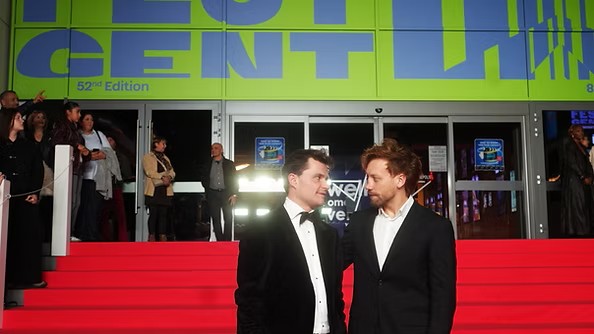
I have an enormous love for Film Fest Ghent. It was the very first film festival I ever attended in my life, and it shaped me. In 2013, when I was still in high school, we had the chance to either go to the Venice Film Festival for a project week or intern at Film Fest Ghent. I chose Ghent. That was my initiation into the festival world, and I was immediately captivated. I wandered around from early morning until late at night, taking everything in. I wanted to be everywhere and see everything up close. Those memories, twelve years later, are still deeply embedded in me.
I continued coming back to Film Fest Ghent every year as a visitor. I saw an incredible number of films and had fantastic experiences. When The Last Front was finished, unfortunately it was too late to screen it in Ghent, so that didn’t happen. But with Two Prosecutors, all the stars finally aligned. For me, it truly feels like coming home to present my first acquired film here. Kinepolis Ghent, where the screening takes place, is probably the most important cinema in my life — it holds so many memories. Film Fest Ghent carries a very deep emotional significance for me.
I can hear that. And you also studied in Ghent, right?
That’s correct, I lived in a student residence here. So it’s quite natural that this is even more special for me. Almost like a boyhood dream, actually.
It’s wonderful that it’s now possible to show your film there.
Yes, I’m so happy about it. Moreover, I know that the audience at a festival like Ghent is open to this kind of challenging cinema. They come precisely to make new discoveries, so we couldn’t have asked for a better fit.
What do you hope the audience will take away from the experience, after seeing the film? What should they be talking about in the cafés afterward, from your perspective?
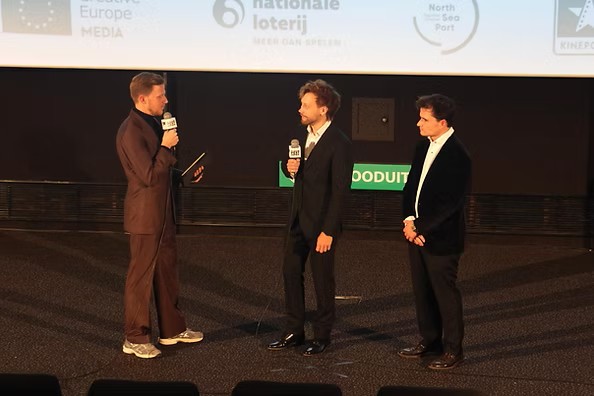
Well, a fun extra: our lead actor, Aleksandr Kuznetsov, will be present at the screening. When the lead appears live for the audience, it makes an impression, adding a special dimension to the evening. But in terms of content, I mainly hope viewers leave with something to think about. I hope they realize how important it is to protect the rule of law, to safeguard individual freedom, even if you disagree with someone. Nowadays, it’s easy to normalize “canceling” or dismissing people with a ‘wrong’ opinion. This film shows the consequences when we let go of those basic principles of justice. I hope that stays with them and sparks conversations. And of course, I hope they simply have a powerful cinematic experience, one that lingers even after the credits roll.
How do you see the role of film festivals, and specifically Film Fest Ghent, in promoting such auteur films?
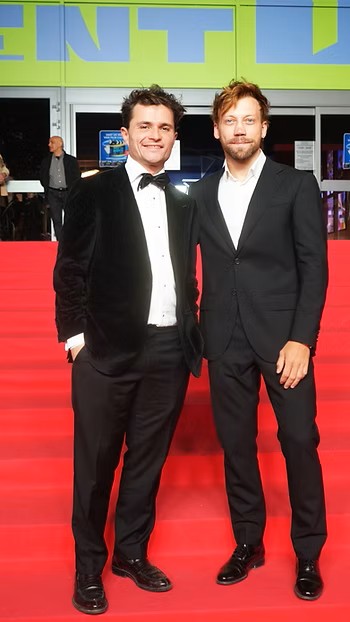
A festival can be a safe haven for films that don’t have a “mastodon” distributor behind them. It provides a platform and a form of protection for auteurs to get their work in front of an audience. When passionate distributors and passionate filmmakers come together at a festival that is open to that, you get a beautiful synergy. Such a festival becomes a shining beacon in the film landscape.
Of course, at every festival you’ll see things that appeal less to you, that’s just how it is. But that’s not the point. What matters is that a festival is constantly in motion: every day there’s something new to discover, every day you can be surprised. Maybe you see a film that stays with you ten years later. I’ve attended editions of Ghent where I walked out of a film halfway through, but I’ve also seen films at my first visit that still move me to this day. That mix of the unexpected and the adventurous, that’s the beauty of a festival. You have to enjoy yourself and let yourself be surprised.
Absolutely, that’s the joy of a festival evening… but finally, what plans do you have after this premiere? How are you going to continue releasing Two Prosecutors in Belgium, and what is your long-term vision for Enigma?
Two Prosecutors will have a wide release in Belgian cinemas starting November 5. Exactly how many theaters, we’ll have to see, we’re working to get it into as many as possible. On December 16, we’ll release our next film (which I unfortunately can’t reveal yet, the final contract signature isn’t even dry). Ultimately, with Enigma, I want to establish a rhythm of a few films per year: roughly two in the spring and two in the fall.
That sounds feasible. Most people might go to the cinema only once every few months, so if you have a strong film ready every few months…
Exactly. You and I might want to go every week, but the average viewer goes maybe once every two or three months. Then we have to make sure that something truly good is available at those moments. Sometimes we tie a release to a festival premiere, sometimes we release a film independently, we look at each case individually. What we always want, though, is for a film not to disappear immediately afterward. We want a kind of “reliquary” approach: treating a film as a valuable artifact rather than as a piece of content that’s forgotten after one weekend.
Concretely, what I mean is: we release a film in theaters and then give it a beautiful second life through special screenings, physical media, and so on. We want to avoid a film being reduced to “something you watch on your phone while making dinner.” A film is not a piece of code on a streaming platform that you scroll past while ironing, you know. We aim for people to experience our films consciously, as something unique. That’s what we’re striving for.
Totally understandable
There you go!
Final Reflection:
After our conversation, what remains most strongly with me is admiration for Julien’s uncompromising love for cinema. He has turned the obstacles in his path into motivation: where doors were closed, he opened new ones himself. As a distributor, he defends the voice of the auteur and ensures that films which others might overlook still reach the audience. His journey,from a young debutant who hit closed doors everywhere, to a filmmaker-entrepreneur who created space for authentic cinematic art with his own hands, is one marked by passion and perseverance. Julien Kerknawi proves that sometimes you have to take matters into your own hands to keep real cinema alive. That drive and idealistic vision promise much for film lovers and filmmakers alike who are longing for authenticity on the big screen. And as Julien put it so aptly: The journey is the best part. His journey has only just begun, and we look forward with excitement to discovering what cinematic adventure awaits next.
You can find the review of Two Prosecutors on this site under the “Films” section.
Text: Esmeralda Wolf
