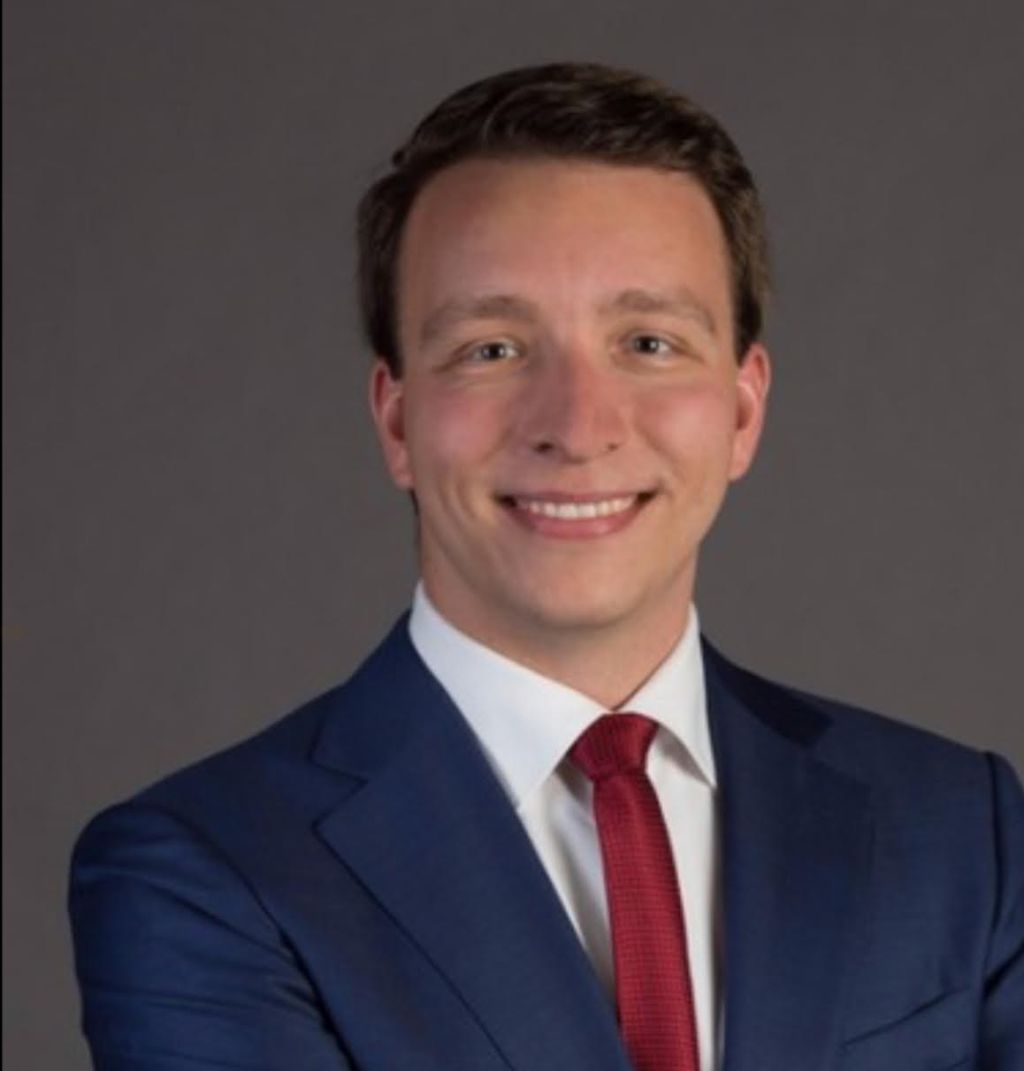
‘I really want to get more people enjoying board games.’ – A.
Last year, I stumbled upon Jolly Dutch by chance. I was particularly interested, not because of a specific game, but because of the vision behind its production. I love talking to people in the board game world and seeing how the existing landscape is gradually changing. Which creators have a clear vision and mission regarding ecological values in this industry. The conversation stayed with me. When I decided to go to Spellenspektakel Utrecht this year to meet people and talk to creators, I saw Jolly Dutch among the exhibitors. It was immediately clear to me that I wanted to visit the stand and meet Alexander, the man behind this wonderful company.
Esmeralda: Hello Alexander, your brand appeals to me because I have heard a lot about Jolly Dutch. What a pleasure to be able to speak to one of its founders. Can you outline how and when you started Jolly Dutch?
Alexander: It actually started because I grew up with board games. I had a favourite board game called Big Boss. (laughs) I really grew up with it; it was my favourite game. But I always thought: there are things that could be improved. So I started tinkering with it a bit and, with my family and some LEGO bricks, I made my first version. That was a lot of fun. But to be honest, I can’t even draw a straight line. I’m completely useless when it comes to design. So that wasn’t very helpful.
Later, I happened to bump into someone who is completely into design. That’s Arnold. When I met Arnold, he had just had the dream of creating another beautiful physical product. At the time, he was only working digitally. That’s how we found each other. Arnold wasn’t really into games, and I was completely crazy about them.
In 2017, we decided to take the plunge and said to each other: well, let’s do this! In 2017, we registered as a company, as Jolly Dutch Productions. Nowadays, we no longer use Productions.
Once the company was set up, we started a crowdfunding campaign. That first crowdfunding campaign failed miserably. (laughs) After three days, we pulled the plug. Because after three days, we realised that even our family and close friends didn’t really know how to use Kickstarter, but worse still, we weren’t explaining the game properly. If, after three days, you haven’t even managed to sell the game to your own father, you have to draw your own conclusions. So we decided to pull the plug.
We then spent several months making adjustments. To make it more attractive, but above all to work on the marketing. In 2018, we launched a new Kickstarter: Chartered: The Golden Age. At the time, it was one of the better Dutch board game Kickstarters. We raised 55,000 euros. By then, I had been working on the idea of actually doing this for seven years. In 2019, Chartered: The Golden Age was finally launched on the market. This was our first game, and that’s how it all started.
My childhood dream had come true. We were even approached by the NOS Journaal, the Dutch national news programme. They broadcasted a positive news item about our game. If you search for the terms “Alexander” and “Catan”, you can still find it on the NOS website. (laughs)
Catan is actually still a bit painful, because they filmed at my house for six hours. They kept asking questions to steer the conversation towards a comparison with Catan. I always advised against that, because it really has nothing to do with it. But at one point, we were in a game shop and I said, ‘I’d like to see my game here.’ Then they asked, ‘Do you want it to sell as well as Catan?’ I replied, ‘Yes, of course I want this to be the new Catan.’ Later, they used that as the title: ‘Chartered, this will be the new Catan.’
Esmeralda: (laughing): Oh, and did it become the new Catan?
Alexander: It did generate a lot of sales for us, especially because it was featured on the news. It’s perfectly fine that they presented it that way. The game sold out within a year and a half! We were already working on a new print run, but then COVID-19 hit… At that point, we were still manufacturing in China.
Esmeralda: So it probably wasn’t entirely eco-friendly at that point?
Alexander: No, we made that choice when things evolved from a hobby to a business. We made the first four games over the course of two years. That was really still a hobby and a learning process. Later, we said: this is taking up so much time, is this a hobby or is it work? That’s when we decided to turn our hobby into our work. We then made the decision to raise external capital and hire four people.
We also decided: if this is really going to be a business, what are our core principles? The most important one was that it had to be as eco-friendly as possible.
Esmeralda: And what are the other core principles?
Alexander: The other is that we only want to work with local game designers. So Dutch-speaking, Flemish or Dutch authors. And therefore also games.
Esmeralda: Don’t you publish anything in English?
Alexander: All our games come with English rules. But the authors themselves must be Dutch-speaking.
A third core principle is that all our games must be family friendly. We don’t want heavy games. We actually want games where, after a long day at work, you can take a game out of the cupboard and think: this is a nice way to relax. We do have a few larger games now, such as Kuldhara and Chartered, but once you know them well, you can play them in an hour.
Esmeralda: You mentioned earlier that you grew up with board games. What do you remember most about that? How does that nostalgia manifest itself?
Alexander: I always played with my father and my brother. My brother was six years older, so I was always the one who had to keep up. But above all, I got a feeling of love, connection and affection from it. That’s still what board games mean to me. That’s why I said: I really want more people to enjoy board games.
When we started, there were very few small Dutch publishers. We agreed that our goal was really to get people back around a table. At that time, everything was digital: apps, screens, everything. We said: we don’t want anything digital. Everything has to be able to be laid out on the table. We also don’t want you to need an app for our games. Back to analogue, to the time when that was normal. To feel that connection again, the sense of touch, and also the excitement of the game, together around one table
Esmeralda: Do you also have cooperative games in your range?
Alexander: Yes, we have one cooperative game. Why? To be honest, I don’t really like cooperative games myself. That’s because I’m quite an alpha player. (laughs) For example, when I play Pandemic, I often tell people what I think they should do. That doesn’t make it any more fun. But anyway, we wanted to make a cooperative game, with the main condition being that it’s impossible to be an alpha player. A bit like in The Crew. You can’t communicate about your cards. We’ve incorporated that into our game as well.
I understand that people make the connection with connection and love, because that’s part of our core values. Personally, I’m still convinced that the most fun is had when there are winners and losers, more so than in cooperative games. But that’s just my personal opinion, of course.
I can already reveal that we have a few people in our team — we currently have eight permanent staff — who are big fans of cooperative games. So there will definitely be more in the future.
Esmeralda: Aha, okay. I’m already looking forward to it. (laughs)
The first time I heard about you, your core value of ‘everything must be ecological’ really appealed to me. Call it my kumbaya side, but I’m always looking for people who share my love for nature. Does that mean that everything in your games is truly biodegradable?
Alexander: Yes, actually. Sometimes it’s not entirely possible yet, but that is our goal. Since we set that course, we have been achieving it.
Take Kuldhara as an example: we made a different choice there. Unfortunately, it is not completely biodegradable, but we have not abandoned our values. On the contrary.
Esmeralda: Yes, I’m curious about the story behind the production of Kuldhara.
Alexander: Kuldhara was made partly in Germany and partly in Poland. We made a different choice there because complex structures had to be incorporated. The components are made from re-wood, which is completely biodegradable. However, the Poles do not work with renewable energy. The Germans do, but they point out that the ink used in Poland is not completely ecological because the production process is polluting.
These are dilemmas we still often encounter today. We always try to make a conscious choice in this regard: what is as ecological as possible in this context? For us, ecological does not necessarily mean completely biodegradable, but it does mean that the ecological footprint is as small as possible. What we cannot avoid, we compensate for through Trees for All by planting trees. Of course, this is partly greenwashing, but we do what we can within our means.
Esmeralda: I think it’s very brave of you to make such conscious ethical choices for each component. That doesn’t seem like the easiest route to take. Is it true that everything is made in Europe?
Alexander: As I said earlier, of the first four games, two were still made in China, one in Germany and one in the Netherlands. When we decided to see this as a real job and no longer as a hobby project, we took the ecological choice to its logical conclusion. No more China. Currently, everything is made in Germany or Poland. The factory that makes biodegradable products is located in Poland.
Esmeralda: That’s super interesting!
Alexander: Yes, we were the second company to have that done there. Since then, we have also encouraged many other Dutch publishers to take that step. We still get a lot of gratitude for that. The quality is good, the communication is good, and they really understand the ecological story.
Esmeralda: Yes, that’s also extremely important these days.
Alexander: Absolutely. But it is often forgotten. For example, we are not available in large chains such as DreamLand, because they say they are not willing to pay more for an eco-friendly game. The price has to be lower. We cannot offer that without compromising our core values.
We are currently looking at how we can further serve the Belgian market. That is now being done through Asmodee. It is a big player, but we notice that when people play our games and get the explanation from someone who really believes in them, they feel how much love has gone into them. By working with Glenn Dejaeger, we now also have an ambassador in Belgium.
We now have a large community in the Netherlands. As you can see here at the fair, in addition to our permanent staff, there are also twenty volunteers who are happily helping out here for two days. I used to do that myself, and I want to take good care of those people. It really becomes a community. We are now building that in Flanders and Belgium as well.
Only Wallonia is difficult. We don’t have any French manuals yet, and unfortunately my French isn’t very good. German is okay, but French remains a work in progress.
For example, behind you is the game Operation Cuckoo. You can see those big eggs and birds, wooden pieces. When I ordered them, I entered the wrong size. We received eggs that were ten times smaller. We had 5,000 sets of them. You could throw them away, but we don’t do that. We turned them into a travel edition. That way, the ecological idea remains intact: there is no such thing as waste, everything can be given a new purpose.
None of our demo games, even if they are completely worn out, go to the rubbish tip. We donate them to social initiatives. In this way, we really try to avoid anything going to waste. And that idea, and those unexpected solutions, appeal to people
Esmeralda: Yes, there is a real need for that these days.
Alexander: Absolutely. I also wrote an article on our website about that choice with the small eggs and the travel edition. What we hope is that our way of working will become the new standard. That eco-games will become the norm. That big players such as 999 and White Goblin will also get on board. Because that should actually be their responsibility. Consumers are not always ready to pay more, but that should really be the norm.
We also make customised games for companies. We discuss their needs with them. In 99 % of the cases, the most important point is that it must be completely ecological. These are often larger companies that have to be accountable for this. In the board game world, you still often see: more, more, cheaper. Many boxes are full of air. We say: we sell games, not air. Our boxes are as compact as possible.
This does mean that when our games are released abroad, such as Cloudy Kingdom, which is released in Germany as Wolkenreich, the box sometimes becomes larger because the publisher feels that otherwise they cannot justify the price. We say: that is your choice, but we do so reluctantly.
Esmeralda: That reminds me of the founder of Glasstaf, a young entrepreneur who designs packaging that can be reused, for example as a dice tower. (shows the dice)
Alexander: Great! Initiatives like that should really be the norm. It’s innovative and smart. Ideas like that work. But as long as there are no regulations to enforce it, I fear that price pressure will continue to win out.
We now also have the Jolly Club. People can register and become members. This is now also possible in Belgium.
Esmeralda: Oh, really? And what exactly does that entail?
Alexander: We are the first in the Netherlands to offer a game subscription. You sign up and we develop six games a year especially for our members. Every two months, you receive a new game in your letterbox. This has recently become possible in Belgium too.
We are still looking at the best way to handle this logistically, because in the Netherlands we work with a carbon-neutral carrier. In Belgium, that is still a bit more difficult.
Esmeralda: I can imagine. Belgium is still lagging behind in that respect, but let’s hope that transition continues quickly.
Alexander: Absolutely. We must remain hopeful about the future
Esmeralda: Alexander, I am very pleased that you have made so much time for this extensive interview despite the hustle and bustle of the trade fair.
Alexander: It was my pleasure
Looking back on the interview
It was a real pleasure to sit down with Alexander and talk about his company and his passion. His youthfulness and enthusiasm are very infectious. I felt it was important to give the story of Jolly Dutch and its founder a face, and to get more people excited about this wonderful project. Despite the enormous crowds at Spellenspektakel Utrecht, Alexander took the time to talk about his project at length.
The concept of the game subscription is a great initiative to support Jolly Dutch, so that they can continue to make their games in line with their core values. More information about the Jolly Club can be found here:
https://jollyclub.nl/
I also received the game Kuldhara to review. You can find the review here.
Text: Esmeralda Wolf
